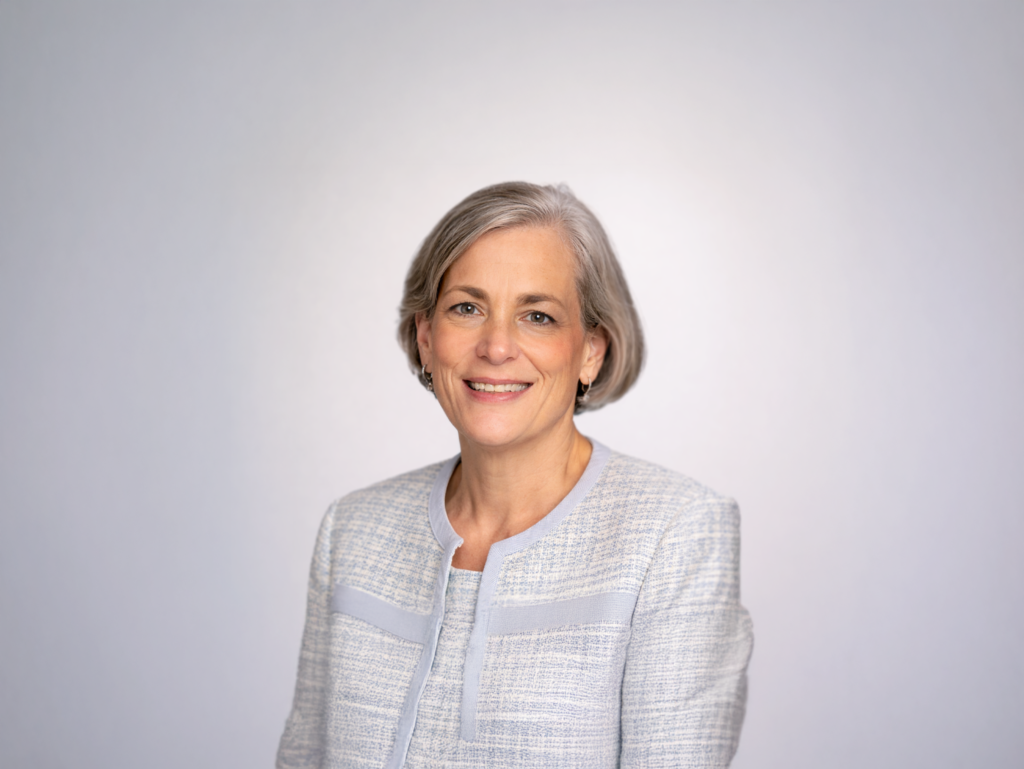
Beth Sirull, President and CEO at NOD, reflects on a career grounded in the belief that economic self-sufficiency is key to freedom—and how advancing disability inclusion at work benefits both people and businesses.
While I am still a good bit away from retirement, I am definitely in the “twilight” of my career. As I reflect on my working life, I can see a throughline from the values instilled in me as a child across to the present day.
I have lead three nonprofit organizations in my career—one that invested human and financial capital in small businesses to create quality jobs in historically underestimated communities, then a community foundation, and now the National Organization on Disability (NOD), where we work with employers to build disability inclusive workplaces to increase both the number and quality of jobs for people with disabilities. While these are three very different organizations, there is a common thread: They all work to enable people to be economically self-sufficient.
I care about a lot of causes—climate change, social justice, civic engagement—but economic empowerment has always had the strongest pull for me. I was raised in the Jewish tradition, and my mom often spoke of Maimonides, a twelfth century philosopher, physician, and rabbi, and his Eight Levels of Charity. Starting with the lowest form of charity, the eight levels go like this:
- Giving Reluctantly: Giving, but with sadness, regret, or pain, rather than joy.
- Giving Cheerfully, but Inadequately: Giving willingly and with a smile, but less than the recipient actually needs or less than the giver can afford.
- Giving Upon Request: Giving directly to the poor, but only after being asked.
- Giving Before Request: Giving directly to the poor before they are forced to ask.
- Anonymous Recipient, Known Giver: The recipient knows who gave the gift, but the giver does not know who received it, protecting the giver from pride.
- Known Recipient, Anonymous Giver: The giver knows who receives the gift, but the recipient does not know the benefactor, protecting the recipient from shame.
- Anonymous Giver and Recipient: Both parties are unknown to each other, typically achieved by giving to a trusted communal fund.
- Enabling Self-Sufficiency (Highest Level): Providing a loan, grant, partnership, or employment that strengthens a person, so they no longer need charity.
Why is it that I am reflecting on this now, in April 2026? Because this is when I celebrate Passover, the Jewish holiday that serves as both the historical foundation of the Jewish people and the modern-day clarion call for freedom for all. Economic self-sufficiency is a necessary condition for freedom. And enabling people to support themselves and their families is the foundation on which I’ve built my career.
Today, while leading NOD, I get to see the rewards of self-sufficiency doubled. When Americans with disabilities get a job, they gain independence and purpose; employers doing the hiring gain highly-qualified, loyal workers, stronger teams and better engagement, maximizing their success.
It’s simple really. Disability inclusion is good for business: NOD’s longitudinal research shows that companies that add just one accessibility best practice will see a 19% decrease in employee turnover in the following year.
I am truly blessed to have work that is in perfect alignment with the values and goals that I have held all my life.
###
About the National Organization on Disability (NOD)
The National Organization on Disability (NOD) is committed to increasing employment opportunities and fostering inclusive work environments for the millions of Americans with disabilities. NOD offers a suite of employment solutions tailored to anticipate and meet leading companies’ workforce needs and has helped some of the world’s most recognized brands be more competitive in today’s global economy by building or enriching their disability inclusion programs.
For more information about NOD, visit www.nod.org.